Wedding Guest Rooms in Ujjain: Block Booking Near the Temple
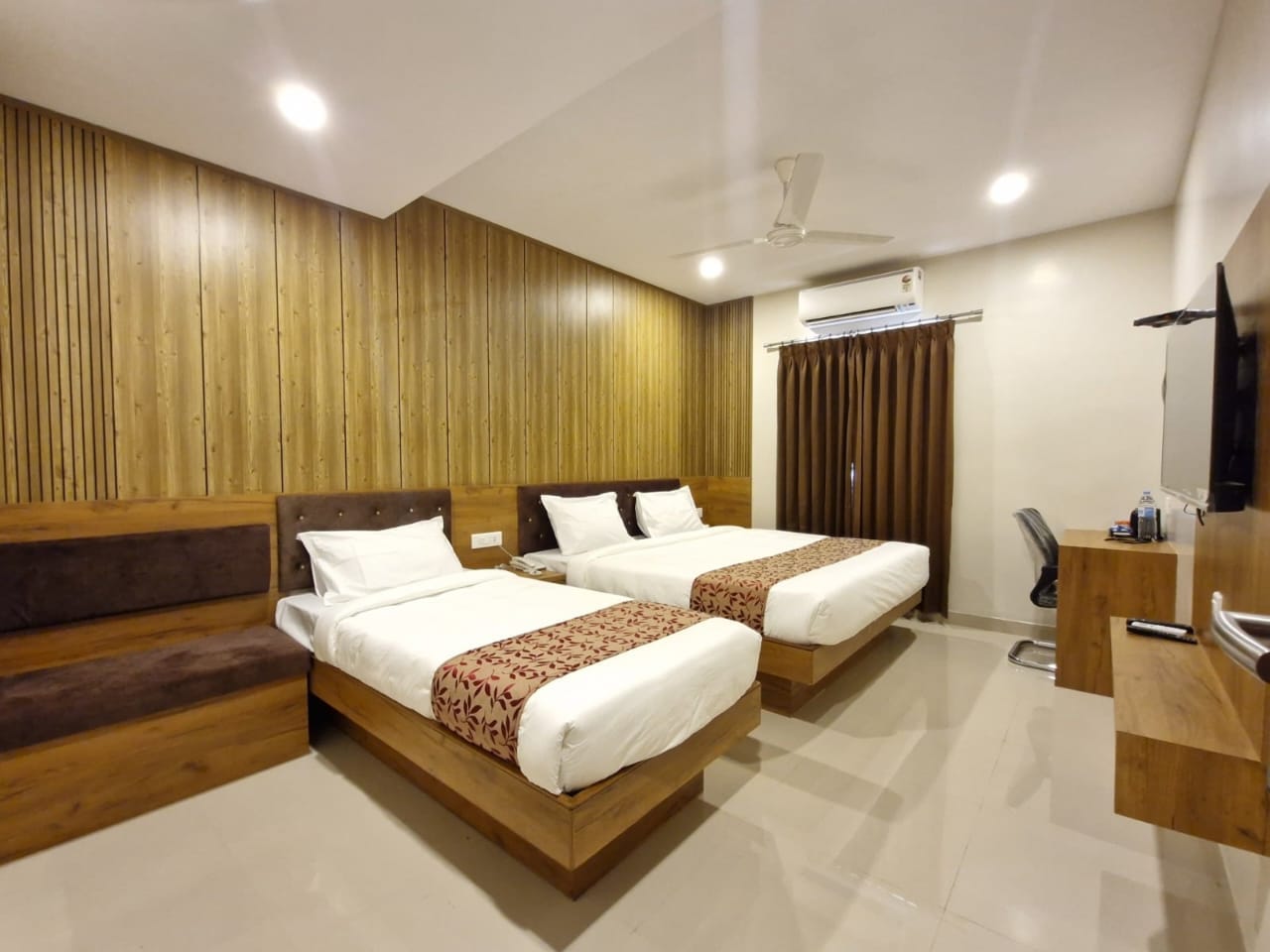
A Ujjain wedding is rarely just one function in one hall. Between the haldi and the muhurat, the relatives driving in from Indore, Bhopal, Ratlam and Ahmedabad, and at least half the guest list wanting Mahakal darshan squeezed between ceremonies, the city fills up with outstation baraats and family delegations every season. That is why wedding rooms in Ujjain are a planning problem of their own — and why a smart guest rooms block booking in Ujjain, done four to eight weeks early, saves a family from scattering its guests across the city. We manage exactly these blocks at our dharamshala on Gopal Mandir Road, 200 m from the temple gate, and this is the guide we wish every wedding planner in the family would read first.
Why Ujjain Weddings Need Room Blocks
Individual bookings look harmless until they collide with wedding reality:
- Guests arrive in waves, not at once. The core family lands two days early; the baraat convoy arrives on muhurat day; cousins trickle in around both. Ten separate bookings made at ten different times is how a family ends up in three different neighbourhoods.
- The wedding season is also the darshan season. November to February is peak for both weddings and pilgrimage — Somvar crowds and marriage parties are literally competing for the same temple-quarter rooms. Verify current availability early; the bands that look open in September look nothing like December.
- Muhurat timings ignore hotel schedules. A 3 AM muhurat means guests returning at 5 AM, and a stay that cannot flex around that becomes the weak link in the whole celebration.
A room block — one booking, one coordinator, mixed room types under one roof — solves all three at once.
Blocking 3 to 10 Rooms of Mixed Types
The trick to a good block is matching room types to guest categories instead of booking one size for everyone. Here is a mix that works for a typical 20-to-30-guest outstation contingent:
| Guest category | Room type | Tariff per night | Notes |
|---|---|---|---|
| Elderly grandparents | 2 Bed AC | ₹1,650 | AC comfort, quiet, easy bathroom access |
| Couple with children | 3 Bed AC | ₹2,050 | One room keeps the family together |
| Group of cousins or friends | 4 Bed Non-AC | ₹2,100 | Budget-friendly split in cool season |
| Baraat members | 4 Bed AC | ₹2,475 | Comfort for heat-season weddings |
| The couple, post-wedding | Deluxe Suite | ₹3,150 | A proper first-night room near Mahakal |
A block like this keeps per-head costs sane — a 4-bed at ₹2,100 works out near ₹525 per person — while giving elders and the couple the comfort tiers they actually need. For the full room-type logic, our family rooms guide near Mahakaleshwar breaks down which configuration fits which household shape.
Parking for Guest Vehicles
Weddings move in convoys — cars from three cities, a tempo or two, sometimes a bus. Parking is where temple-quarter stays usually fail, and where it pays to ask before booking. At our dharamshala, free parking for cars and bikes is part of every booking, and for larger fleets we coordinate arrival slots in advance so the yard stays usable across the wedding days. Tell us the vehicle count when you block the rooms; it takes one line in the same message.
Check-Ins That Bend Around the Muhurat
Our standard timing is check-in 12 PM and check-out 11 AM — but a wedding block is not standard. Share the muhurat schedule with us while booking and we coordinate around it: late-night arrivals after a reception, early returns before a brahma-muhurat ceremony, guests who need to freshen up mid-day rather than sleep. This flexibility is the single biggest reason families choose a family-run dharamshala over a rigidly-checklisted hotel for wedding contingents. It is also the piece that cannot be improvised at the last minute — it has to be in the booking.
Group Meals Without the Chaos
Outstation guests plus wedding timings equals impossible meal schedules: someone is always in a function, in transit, or fasting for the ceremony. Our pure veg kitchen smooths this for blocked groups:
- Fixed meal headcounts shared a day ahead — breakfast and dinner for the whole block under one instruction.
- Flexible serving windows around muhurat timings rather than fixed hotel dining hours.
- Satvik and dietary variants — onion-garlic-free or vrat meals for ceremony days — flagged once for the group instead of negotiated per plate.
One kitchen, one instruction list, no scattered restaurant runs in wedding attire. For the fuller mechanics of booking rooms for any large contingent — advance amounts, room-type splits, coordination — our group booking guide for Ujjain dharamshalas is the companion read to this one.
The 4 to 8 Week Rule
Work backwards from the muhurat date: block 8 weeks out for peak-season weddings (November to February), 4 to 6 weeks out for off-season dates. Before confirming, lock four things in writing — room types and count, nights, vehicle count, and meal requirements. That one message is the difference between a wedding where guests see each other and a wedding where guests commute.
The Room-Type Cheat Sheet
A well-balanced block mixes room types to match guest categories, and the table we opened with is the core of it. Let us expand that logic with a few more combinations families actually use:
| Guest category | Recommended room | Per-night tariff | Why this fits |
|---|---|---|---|
| Elderly grandparents or in-laws | 2 Bed AC | ₹1,650 | Quiet, AC comfort, bathroom close to the bed |
| Couple with one or two children | 3 Bed AC | ₹2,050 | Keeps the family together, one attached bathroom |
| Group of cousins or young friends | 4 Bed Non-AC | ₹2,100 | Budget-friendly split, works well in cool season |
| Baraat members in summer | 4 Bed AC | ₹2,475 | AC comfort when Ujjain hits 40+ degrees |
| The newlyweds, first night | Deluxe Suite | ₹3,150 | The splurge that makes the night feel like a night |
| Two elderly guests travelling together | 2 Bed AC | ₹1,650 | Same room, shared cost, familiar comfort |
The per-head arithmetic is what wins families over. A 4-bed at ₹2,100 shared among four is ₹525 per person per night — roughly the cost of one restaurant meal in a metro, and that room comes with hot water, WiFi, parking, a pure veg kitchen and a two-minute walk to Mahakal darshan.
For the same logic applied to family trips that are not weddings, our family rooms guide near Mahakaleshwar walks through every configuration.
What to Include in Your First WhatsApp Message
Most wedding blocks arrive as one long message or a flurry of calls. Here is the one-message format that gets you a clear reply in minutes:
Namaste, we are looking to block rooms for a wedding in Ujjain
on [date] for [X] nights. Guest count: [total], with a mix of
[X]-bed AC and non-AC. We need parking for [Y] vehicles.
Our muhurat timings are: [arrival time] and [departure time].
Can you share a room mix and a quote?
That one message replaces three phone calls. It also tells us whether you need a late check-in arrangement, extra mattresses, or the kitchen to plan group meals — all of which we can lock in at the same time.
Group Meal Planning for Wedding Guests
Feeding a wedding contingent without turning the dining hall into a chaos zone is a coordination problem with a simple solution: one instruction, one kitchen, one list. Here is how it works in practice:
- Share the headcount a day ahead — breakfast and dinner numbers for the whole block, under one message
- Flag dietary practices upfront — vrat meals for ceremony days, Jain meals for specific guests, simple food for children and elders, all mentioned once
- Meal timing around the muhurat — the kitchen can hold or flex serving windows around ceremony schedules rather than sticking to rigid hotel timings
- Special prasadam for the wedding day — many families ask for a sweet or sheera to be ready for all guests on the muhurat morning, and the kitchen accommodates
The result is that between ceremonies, nobody is hunting for a restaurant in wedding clothes while hungry. They are ten steps from their room and the meal is on the table.
For families arranging other poojas alongside a wedding stay — Satyanarayan Katha, Rudrabhishek, Mahamrityunjaya Jaap — our pooja booking guide explains the coordination flow.
Laundry, Housekeeping and Daily Logistics
A wedding stay that runs three to five days generates laundry in amounts that surprise first-time organisers: sarees, kurta sets for the men, children’s clothes changed three times a day, bedsheets after hosting relatives for lunch. Planning for this before arrival saves the kind of morning that should be about darshan, not about finding a dhobi at 8 AM.
Things to ask when you book:
- Is daily housekeeping included? At Mahakal Bhakta Nivas it is part of the room tariff — the room gets cleaned while guests are at the temple, and nobody returns to an unmade bed after a long queue.
- Can the kitchen handle in-room dining for guests who are resting between ceremonies? Yes, and it is the standard arrangement for elders who do not want to eat in the dining hall on a tiring day.
- Is laundry available on-site or nearby? Ask at booking; local dhobis near Gopal Mandir Road handle same-day laundry for reasonable rates.
Avoiding the Hotel Block Booking Trap
Hotels will offer you a block too, and the pitch sounds identical: same roof, one bill, group rates. But the hotel model has structural weaknesses that a dharamshala model does not:
| Factor | Dharamshala block (ours) | Hotel block |
|---|---|---|
| Check-in flexibility | Late arrivals by prior arrangement | Rigid 2 PM cut-off |
| Meal coordination | One kitchen, one list, one bill | Restaurant per family, no coordination |
| Vehicle parking | Free, on-site, coordinated slots | Often paid, limited, no coordination |
| Proximity to temple | 200 m walk | Often 1–3 km, needs transport |
| Kitchen for poojas | Sheera, prasad, satvik meals available | Room service at best |
| Late-night access | Family-run, flexible | Front desk rules, curfews |
For a wedding contingent that lives on muhurat time rather than hotel time, the dharamshala is the format that bends around the family, not the other way around.
The Full Wedding Timeline: A Sample Plan
To make this concrete, here is what a three-day wedding block looks like when the rooms, the kitchen and the temple are all aligned:
Day minus one (arrival day):
- Guests arrive in waves from Indore, Bhopal, Ahmedabad
- Check-in from 12 PM; late arrivals coordinated in advance
- Group dinner at 7 PM, early enough for the evening aarti
- Walk to Mahakaleshwar for Sandhya Aarti together — a shared first experience
Wedding day:
- Kitchen has breakfast ready before the muhurat hour
- Guests leave for the ceremony venue; rooms stay for quick changes and rests
- Return for lunch or dinner depending on the function schedule
- Evening aarti again for those who are free; others rest
Post-wedding day:
- A slow morning — Mahakal darshan, prasad, the corridor
- Check-out by 11 AM for the departing contingent
- The couple’s suite stays until the afternoon for a relaxed departure
That flow — temple, ceremony, temple, rest — is what a dharamshala 200 m from the gate enables without anyone thinking about it.
Temple Visits During a Wedding Stay
A wedding stay in Ujjain is not just about the functions — the guest list usually expects Mahakal darshan, and the temple quarter makes that easy:
- Bhasma Aarti — requires online registration; our guide to how to book Bhasma Aarti covers the process
- Regular darshan — available from 4 AM every morning; a 10-minute walk from your room
- Evening Sandhya Aarti — Ram Ghat at sunset, 500 m from Gopal Mandir Road
- Mahamrityunjaya Jaap — arrange through the temple administration for specific dates
Keep the darshan schedule visible to all guests — a printed sheet pinned near the dining hall saves a hundred questions during the stay. For the full aarti timings and temple entry rules, see our Mahakaleshwar darshan guide.
Managing Guest Expectations
Wedding guests arrive with different levels of familiarity with Ujjain and the temple. A few practical tips:
- Send a pre-arrival WhatsApp to all guests with the darshan schedule, temple dress code and a map of the temple quarter
- Assign a family member as the temple coordinator — someone who knows the Bhasma Aarti registration process and the general darshan queue
- Keep a list of local contacts — auto drivers, the dhobi, the nearest pure veg restaurant, the hospital — for guests who need help
- Set expectations about crowds — November to February is peak season; inform guests that queues will be long and patience is the best preparation
Weather and Seasonal Considerations
Ujjain weather shapes how comfortable your guests are between ceremonies, and the wrong season-appropriate room mix can turn a joyful stay into a grumpy one:
- November to February (cool, dry) — temperatures hover between 10 and 25 degrees C. Non-AC 4-bed rooms are perfectly comfortable, and the winter sun on the temple corridor is something guests will talk about. This is also peak wedding season, so book earliest for this window.
- March to June (hot, dry) — temperatures climb to 40-plus degrees, and afternoon ceremonies mean guests need AC rooms that cool down fast. Prioritise AC rooms for elders and anyone attending afternoon functions. Hydration stations in the dining area help.
- July to September (monsoon) — rains are heavy but temperatures are pleasant. Non-AC rooms work, but confirm that rooms on the ground floor have no water-logging risk. The city looks beautiful in the rain, and guest darshan queues are shorter.
Plan the room mix around the season, not just the guest count. A family that books all non-AC rooms for a May wedding will hear about it at every meal.
Budget Planning and Hidden Costs to Anticipate
The per-room tariff is only part of the wedding-block budget. Families who plan only around the nightly rate are surprised by three recurring extras:
- Extra mattresses and rollaway beds — often needed when a cousin brings an unexpected plus-one or a child decides to sleep next to a grandparent. Each extra bedding arrangement typically costs a few hundred rupees per night; ask for the rate when you book.
- Group meal top-ups — the kitchen quotes a per-person meal cost, but a wedding-day breakfast that includes sheera, fruit, puris and a full thali costs more than a regular day. Get a per-head estimate for each meal type (regular, satvik, vrat, Jain) so the bill is not a surprise.
- Local transport for guests — if your block is slightly further from the ceremony venue, auto-rickshaw costs add up across multiple trips. Factor a small transport buffer into the overall guest budget.
- Pooja and prasadam contributions — many families offer a dakshina to the temple priest or arrange a small bhandara. These are meaningful but not part of the dharamshala tariff.
Ask for a consolidated estimate — rooms, meals, extras — before you confirm. One written quote beats ten phone calls after the wedding.
Emergency and Contingency Planning
Weddings are high-stakes, high-emotion events, and the best families prepare for the things that should not happen but sometimes do:
- Medical proximity — confirm that the nearest hospital or clinic is within 15 to 20 minutes. Ujjain has good medical facilities, but knowing the closest one in advance saves panic at 2 AM. Keep a basic first-aid kit in the block common area.
- Power backup — ask whether the dharamshala has inverter or generator backup. During summer peak or monsoon storms, a two-hour outage is enough to disrupt a late-night function prep.
- Last-minute cancellations or no-shows — discuss the cancellation and rescheduling policy before paying any advance. A flexible policy is one more reason a dharamshala beats a hotel for wedding blocks.
- Communication tree — assign one person as the point of contact for all room, kitchen and logistics issues. Multiple family members calling with separate requests creates confusion; one coordinator keeps everything smooth.
For families who want to layer Mahakal darshan, a temple pooja or a Mahamrityunjaya Jaap onto the wedding stay, our pooja booking guide covers the temple-side coordination.
FAQ
Q: How many rooms can I block for wedding guests in Ujjain? A: At Mahakal Bhakta Nivas you can typically block 3 to 10 rooms of mixed types — non AC and AC, 2 bed to 4 bed — under one group booking.
Q: How early should I book a wedding room block? A: Book 4 to 8 weeks out. In the November to February wedding season, rooms near the temple go fast because darshan travellers book the same dates.
Q: Can guests check in late at night around a muhurat? A: Yes, tell us the muhurat timing in advance. Standard check-in is 12 PM and check-out 11 AM, but we coordinate late arrivals for wedding groups.
Q: Is parking available for guest vehicles? A: Yes, free parking for cars and bikes. For a large baraat or a tempo fleet, coordinate arrival slots with us in advance so the yard stays workable.
Q: Can the kitchen cater group meals for guests? A: Yes, our pure veg kitchen can plan group meals. Share headcounts and meal timings along with your room block request.
Q: What is the cancellation policy for wedding room blocks? A: We try to be flexible for wedding families. Contact us as soon as a date change or cancellation is confirmed and we will work out a revised plan — but the earlier you inform us, the more options we have.
Q: Are extra mattresses or rollaway beds available? A: Yes, subject to availability. Let us know the requirement when you send the initial block request so we can plan room assignments accordingly.
Q: Can the dharamshala help with local arrangements like pandits, decorators or vehicles? A: We maintain contacts with local pandits, decorators and trusted auto drivers. Ask at the time of booking and we will share references for services that have worked well with our guests in the past.
Practical Tips for Wedding Coordinators
If you are the person in the family handling the room block, these tips will save you hours:
- Draft the WhatsApp message before you send it. Fill in the date, guest count, room mix, vehicle count and muhurat timings in one sitting. An incomplete first message starts a back-and-forth that delays the block.
- Confirm the room mix in writing. A WhatsApp message with the room types, nightly rates and total is worth more than a verbal agreement. Screenshot it.
- Pin the darshan schedule. Print a simple sheet — morning and evening aarti timings, Bhasma Aarti registration deadline, temple dress code — and put it near the dining area. Guests will stop asking you every two hours.
- Assign a temple coordinator. One family member who knows the darshan queue, the Bhasma Aarti process and the general temple etiquette will prevent fifty small problems from becoming one big headache.
- Pack a guest-welcome kit. A small basket with a printed map, the darshan schedule, a list of local contacts and some dry snacks for the road is the kind of detail guests remember.
- Keep the kitchen in the loop. Send the daily meal headcount by 8 AM so the kitchen can prep without a rush. Same for any special vrat or dietary requirements for that day.
Things to Know Before You Go
Use this checklist in the week before the wedding to make sure nothing slips through:
- Room block confirmed in writing with room types, dates, nightly rates and total
- Advance payment made and receipt received
- Vehicle count and arrival slots shared with the dharamshala
- Muhurat timings communicated for check-in flexibility
- Meal headcounts and dietary requirements (satvik, vrat, Jain) sent to the kitchen
- Extra mattresses or rollaway beds requested, if needed
- Bhasma Aarti registration completed for guests who want it
- Darshan schedule printed and shared with all guests
- Temple dress code communicated (no leather, modest clothing)
- Local contacts list prepared (auto drivers, dhobi, nearest pure veg restaurant, hospital)
- Power backup confirmed, if the stay includes late-night prep
- Cancellation and rescheduling policy noted
- A family member assigned as temple and logistics coordinator
Your Wedding Block, in One Message
Browse rooms from ₹1,250, message us on WhatsApp with guest count, dates, muhurat timings and vehicle count, and we will propose a room mix, a meal plan and a quote that keeps the entire baraat under one roof within a two-minute walk of Mahakal. For the complete darshan sequence, including Bhasma Aarti booking, aarti timings and temple etiquette, pair this with our Mahakaleshwar darshan guide.
We understand that a Ujjain wedding is as much about the temple as it is about the marriage hall. Our rooms, our kitchen and our team exist so that your guests spend their time where they want to be — at the ceremony, at Mahakal’s door, or resting between both — instead of commuting across a city they do not know during the busiest week of their year.
Prices and facilities as of 2026 — confirm when booking.
Frequently Asked Questions
How many rooms can I block for wedding guests in Ujjain?
At Mahakal Bhakta Nivas you can typically block 3 to 10 rooms of mixed types — non AC and AC, 2 bed to 4 bed — under one group booking.
How early should I book a wedding room block?
Book 4 to 8 weeks out. In the November to February wedding season, rooms near the temple go fast because darshan travellers book the same dates.
Can guests check in late at night around a muhurat?
Yes, tell us the muhurat timing in advance. Standard check-in is 12 PM and check-out 11 AM, but we coordinate late arrivals for wedding groups.
Is parking available for guest vehicles?
Yes, free parking for cars and bikes. For a large baraat or a tempo fleet, coordinate arrival slots with us in advance so the yard stays workable.
Can the kitchen cater group meals for guests?
Yes, our pure veg kitchen can plan group meals. Share headcounts and meal timings along with your room block request.
What is the cancellation policy for wedding room blocks?
We try to be flexible for wedding families. Contact us as soon as a date change or cancellation is confirmed and we will work out a revised plan — but the earlier you inform us, the more options we have.
Are extra mattresses or rollaway beds available?
Yes, subject to availability. Let us know the requirement when you send the initial block request so we can plan room assignments accordingly.
Can the dharamshala help with local arrangements like pandits, decorators or vehicles?
We maintain contacts with local pandits, decorators and trusted auto drivers. Ask at the time of booking and we will share references for services that have worked well with our guests in the past.
